CLICK HERE for Help

. . . Expert Advice from an Expert Installer

Finding the Right Storm Doors . . .

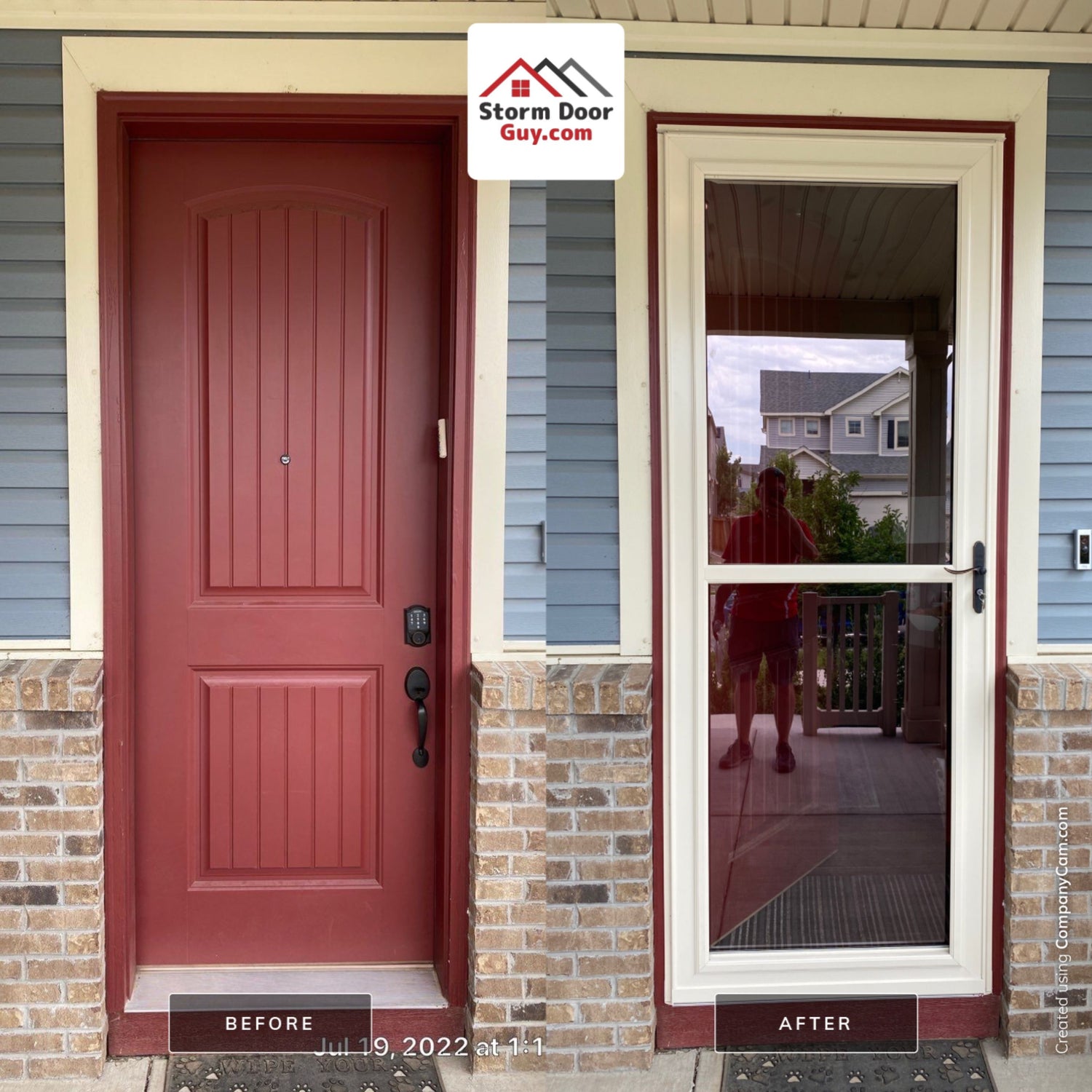
Storm doors can drastically change the look of your house. Whether you are adding or changing your doors to save energy, increase security, or just get ventilation, there are a few things to consider: Price, Material, Size, Handing, and Style.

Price

First, stick to your budget. Storm doors range from $100-$300 for standard sizes to $300-$500 for custom sizes. Keep in mind that a $100 doors are not going to perform like a $500 doors.

Now what makes $500 storm doors better than $100 ones? Materials are the answer. Vinyl storm doors are cheaper than aluminum doors. While you save money on price, they wear out faster because of exposure to the elements. However, a wood-core vinyl door is sturdier and provides better insulation than an aluminum one. On a higher-end unit you may get a choice of custom colors like cranberry, hunter green, or almond where on the lower end you can only have white or black.

The more expensive storm doors also let you pick hardware colors. One important difference is most top end doors come with two closures instead of one. They are mounted at the top and bottom of the door instead of just at the top. This gives the it better rigidity and slower closing speed. Remember, buying a separate piston is only about $5.00, so don't spend an extra $100 on a door just to get a second closer.

The best way to get a sense of pricing is go to Lowe's or Home Depot and look at the storm doors or search online. Personally, I shop online to compare prices and narrow down more what I am looking for. Also, most storm doors are Energystar compliant which means it may qualify for an IRS tax credit.

Materials

Wood versus Metal doors

All storm doors are made from metal, wood, vinyl/plastic, or some combination thereof. Less expensive doors use vinyl/plastic and may or may not have a wood core for added rigidity and insulation. More expensive doors are made from extruded aluminum ("extruded" means "shaped")

The benefits of vinyl/plastic storm doors are that they are less expensive to purchase, easy to clean, and inexpensive to replace. With vinyl doors, the color may be molded throughout. This means that a scratch is less visible because it is not a different color underneath. The drawbacks are that these storm doors wear out sooner, look "cheaper", and have trouble standing up to extreme heat and cold.

The benefits of aluminum storm doors are that they are heavier, more durable, longer-lasting, and better looking. They look classier and offer much more security. The drawbacks are that they are more expensive, are harder to clean, require more maintenance, and can become hot to touch when exposed to the sun.

Size

Standard widths are 30", 32", and 36". Standard heights range from 80"-81" and 96" (for 8' feet tall doors). Traditionally, your front door opening is 36" wide by 80"-81" high. Back doors are traditionally 32" wide by 80"-81" high; however newer homes (built after 1990) have been also using 36" wide by 80"-81" high doors at times.

Handing

Right or Left Hinged

One of the most important questions to think about is, "Which way will it open?" If you are ordering from a retailer make sure that the salesperson is crystal clear on this. In the world of storm doors, handing is everything. Now we get to some industry jargon.

First, ALL measurements assume you are standing OUTSIDE of your house looking at the front door. Now, handing is stated as either "left-handed" or "right-handed." This means that if you but your back against the jamb where you want the door do be hinged, whichever hand of yours is on the outside is the "handing" of your door. For example, let's say you but your back against the hinge side jamb of your front door and your right hand is facing the outside. Then you want a "right-handed" door. The good news on handing is that most standard sized doors can be installed either way; you don't have to purchase a door that is pre-handed (unless you have an 8' tall door).

Now most of the time you want a storm doors' handles to be on the same side as the entry door handles. However, there are a few cases where this is not true. One such case is if you have a wall close to the opening. It is always preferable to have the door open towards a wall that is 12" or less from an entryway. This is to ensure that your "traffic pattern" is not interrupted, meaning that people won't have to open and then walk around it to get into the house. Doing this ensures that the door is not in your way when you enter and exit the house.

Styles

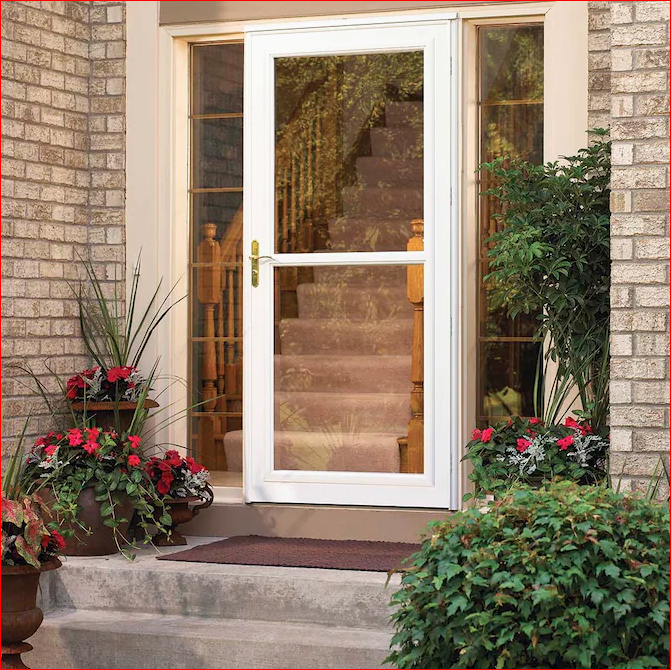
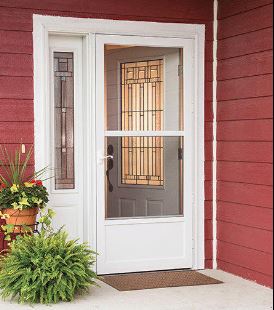
Storm doors come in 3 different styles: Full-View, Ventilating, and Roll-screen.

Full-view

With this style you can have ONLY the glass OR the screen in the door at any given time. You must physically change the glass and the screen and store the one that is not in use. If you want to maximize daylight and visibility to the outside, this is the way to go. As long as you don't mind installing the screen in the spring and the glass in the fall, you will be happy with this style.

Ventilating

If you don't want to change the glass and screen, ventilating style storm doors keep both glass and screen in the unit at the same time. With this style, there are 2 panels of glass, and depending on the manufacturer, one or both move up and down revealing the screen portion and allowing for ventilation.

Rollscreen

Rollscreens are the newest hybrids and take the best of both worlds from the other two styles. In this style, the screen is still self storing like the ventilating model, but you get the visibility of a fullview door because the screen is rolled up when not in use. As you pull the top window down, the screen is attached and then revealed. This is a great choice if you have kids or pets that have a keen ability to destroy screens because the screen is only on the top . . . far out of their reach!

Manufacturers of Storm Doors

Larson storm doors Storm doors by Pella

There are 4 main manufacturers of storm doors. They are Pella, Larson, Emco, and Anderson. Pella storm doors and Larson storm doors are sold by Lowe's. Emco storm doors and Anderson storm doors are sold at Home Depot. From an installer's perspective, I would rank them in order of preference based on product selection, price, durability, warranty, ease of installation, customer service, and fewest number of problems as: 1) Pella, 2) Larson, 3) Anderson, and 4)Emco.

Emco/Anderson storm doors